

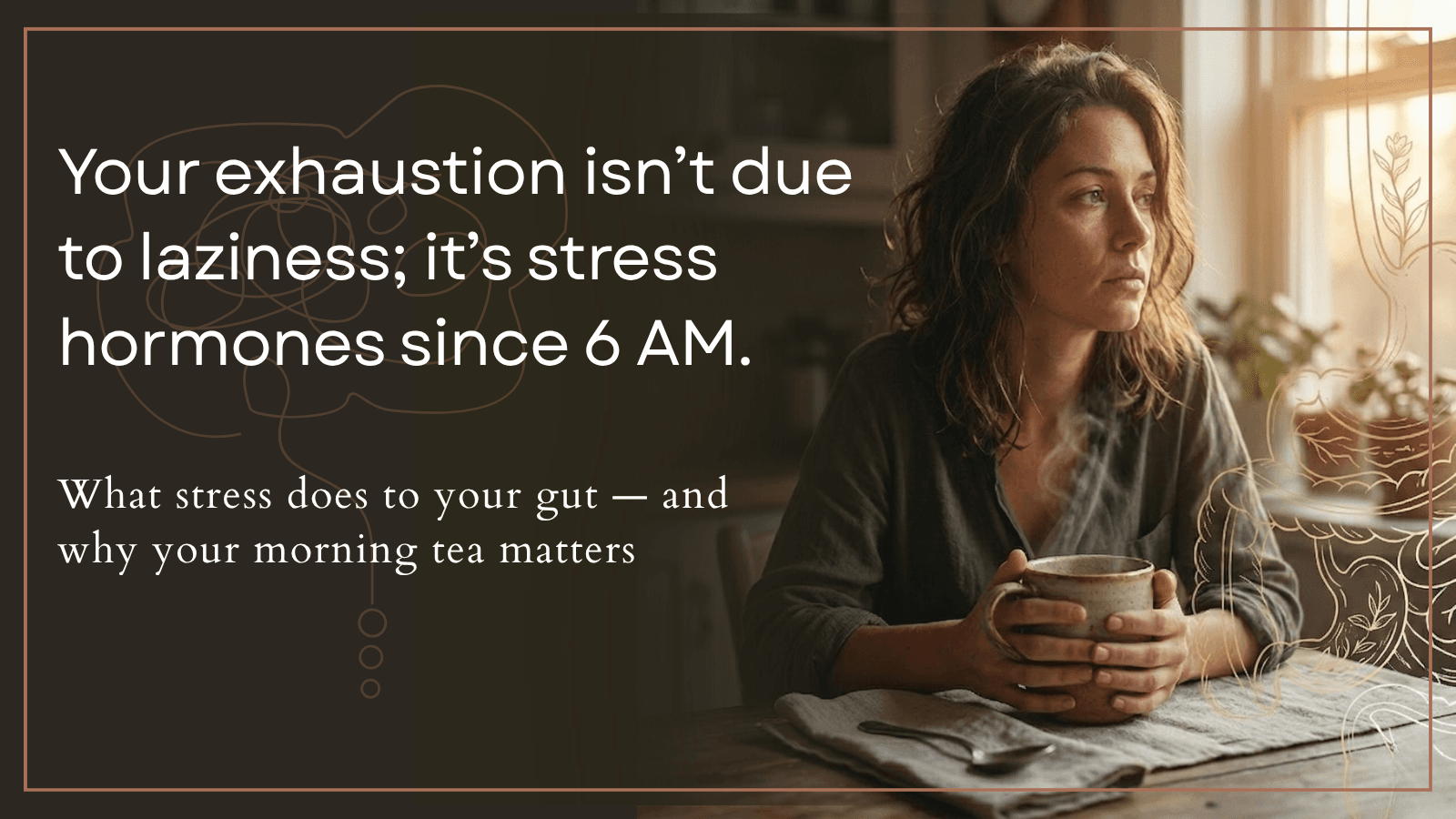
Here's what that does to your gut — and why your morning tea actually matters more than you think.
You wake up already behind. Before your feet hit the floor, your brain is composing three emails, replaying yesterday's conversation, and stress-testing tomorrow's to-do list. By the time you actually stand up, your body has already been in a low-grade emergency for twenty minutes. That familiar bone-deep tiredness at 3pm? The bloating that appears out of nowhere? The foggy thinking that coffee can't fix? These aren't signs that you're weak or unproductive. They're your gut waving a white flag after a full morning of cortisol warfare.
Key Facts
- 77% of adults experience physical symptoms from stress regularly.
- Cortisol naturally peaks at 6am — known as the Cortisol Awakening Response.
- 95% of serotonin (your mood hormone) is produced in the gut.
1. What Happens to Your Body from 6am Onwards
Cortisol — your primary stress hormone — has a natural peak right around the time you wake up. This is called the Cortisol Awakening Response (CAR), and in healthy doses it's actually helpful. It gives you that push-to-get-moving energy in the morning. The problem is that most of us never let it come back down.
The Cortisol Timeline Through Your Day
6:00 am — Cortisol Spike: Your body releases a natural surge of cortisol to wake you up. Heart rate rises, blood glucose increases. Totally normal — unless you immediately layer mental stress on top.
6:15 am — Phone Check: News, emails, social media. Each notification is a low-level threat signal. Your amygdala fires, extending the cortisol spike that should be winding down.
7:30 am — Digestion Deprioritised: In fight-or-flight mode, blood is rerouted away from digestive organs. Stomach acid balance shifts, gut motility slows, and nutrient absorption is compromised.
9:00 am — Gut Microbiome Under Siege: Prolonged cortisol alters the composition of gut bacteria, reducing diversity and increasing inflammatory bacterial populations.
3:00 pm — The Crash: Adrenals are fatigued, blood sugar is erratic, serotonin production is disrupted. You feel exhausted, irritable, and foggy — and no amount of caffeine properly fixes it.
2. How Stress Hormones Wreck Your Gut
The gut and the brain are in constant conversation through the gut-brain axis — a two-way communication superhighway involving the vagus nerve, neurotransmitters, and immune signalling. When you're chronically stressed, this axis gets flooded with cortisol signals designed for short-term emergencies, not 14-hour work days.
It Shuts Down Digestion Your body evolved to divert energy away from digestion in times of stress. The result: slower gut motility, impaired enzyme secretion, and disrupted stomach acid — leading to bloating, cramping, and nutrient malabsorption even when you eat well.
It Damages the Gut Lining Chronic cortisol increases intestinal permeability — commonly called 'leaky gut.' The tight junctions between gut cells loosen, allowing partially digested food particles and bacterial toxins into the bloodstream. Your immune system responds with systemic inflammation, experienced as fatigue, brain fog, and joint aches.
It Destroys Your Microbiome Your gut hosts trillions of bacteria that regulate immunity, mood, and energy. Prolonged stress reduces microbial diversity, depletes beneficial Lactobacillus and Bifidobacterium strains, and promotes inflammatory bacterial populations.
It Crashes Your Mood Hormones Around 95% of your body's serotonin is produced in your gut. When your gut lining is inflamed and your microbiome is depleted, serotonin production suffers — which is why chronic stress often feels biochemically indistinguishable from depression.
"Your gut is not just a digestion organ. It's your second brain — and stress hormones speak to it fluently, loudly, and destructively."
3. Why Your Morning Tea Is a Biological Intervention
It's easy to dismiss a cup of tea as a comfort ritual — something warm and familiar before the day begins. But the ingredients in traditional spiced tea are a remarkably well-constructed anti-inflammatory, gut-supportive blend refined over thousands of years of Ayurvedic practice. The active compounds in tea spices have been extensively studied for their effects on the very systems that cortisol disrupts.
Ginger (Zingiber officinale): Potent anti-inflammatory. Stimulates digestive enzymes, reduces gut inflammation caused by cortisol exposure, and supports motility.
Cardamom (Elettaria cardamomum): Supports the parasympathetic ('rest and digest') nervous system. Reduces cortisol-induced oxidative stress in gut tissue with prebiotic-like effects on beneficial gut bacteria.
Cinnamon (Cinnamomum verum): Regulates blood sugar — critical for preventing cortisol-driven glucose spikes that worsen afternoon crashes. Also helps balance gut flora disrupted by stress.
Black Pepper (Piper nigrum): Piperine increases the bioavailability of other spice compounds by up to 2,000%. Also has its own anti-inflammatory and gut-protective effects.
Clove & Star Anise: Rich in eugenol and anethole — compounds with proven gut-soothing, antimicrobial, and anti-spasmodic properties that ease stress-related gut discomfort.
Beyond the compounds, the ritual itself matters. Taking 10 minutes to make and drink your tea — without a screen, without multitasking — activates the vagus nerve and promotes parasympathetic tone. You are signalling to your nervous system that the emergency is over.
4. How to Make Your Morning Work With Your Biology
Delay your phone by 20 minutes: Give the natural cortisol spike space to resolve before adding cognitive load. The news will still be there. Your stress response will thank you.
Eat something before 9am: Cortisol and an empty stomach is a combustible combination for gut inflammation. Even a small meal helps anchor your blood sugar and restores gut motility.
Make your morning tea a ceremony, not a chore: Boil the spices from scratch. Smell the ginger. Sit down. The bioactive compounds matter — but 10 minutes of intentional stillness is the part modern medicine consistently undervalues.
Breathe before you eat: Three slow, deep breaths before your first meal activates the vagus nerve, shifts you toward parasympathetic dominance, and dramatically improves digestion. It takes just 15 seconds.
Frequently Asked Questions
Q: Why am I exhausted even though I sleep 7–8 hours?
A: Chronic stress disrupts the deep restorative phases of sleep (NREM stages 3 and 4) even when total hours look adequate. High cortisol also impairs melatonin production — meaning you technically sleep, but don't truly recover.
Q: Can stress really cause bloating and gut problems?
A: Absolutely. Cortisol and adrenaline slow gut motility, alter enzyme secretion, and cause intestinal permeability — producing bloating, discomfort, and food sensitivities that can seem to appear out of nowhere.
Q: Does morning tea actually help with stress?
A: The spices in traditional tea (particularly ginger, cardamom, and cinnamon) have demonstrated adaptogenic and anti-inflammatory properties. They support the gut lining, help regulate blood sugar, and reduce the inflammatory downstream effects of cortisol. The ritual aspect also promotes parasympathetic activation, which naturally lowers cortisol.
Q: What is the best time to drink spiced tea for gut health?
A: Morning, after a small meal, is ideal. Having it with a light breakfast gives the spices something to work with and blunts the potential caffeine-cortisol interaction.